Trusted by infrastructure engineers in 90+ countries. Request Technical Data Sheet →

Solmax Sustainability — Engineering a Greener Future with Geosynthetics

Geomembranes are inherently sustainable materials. Lighter than clay, more durable than concrete, and verifiably impermeable — they protect ecosystems while extending the service life of critical infrastructure.

Why Geosynthetics?

The Environmental Case for Geomembranes

A 1.5 mm HDPE geomembrane weighs approximately 1.4 kg/m². An equivalent clay liner meeting GCL performance standards requires 600–900 mm of compacted clay — approximately 1,080–1,620 kg/m². The carbon intensity of extracting, transporting, and compacting that clay dwarfs the embodied carbon of the geomembrane in almost every scenario.

Additionally, a properly installed and tested HDPE liner achieves permeability coefficients of 10⁻¹⁴ m/s or lower — orders of magnitude below the most carefully compacted natural clay. In contamination-prevention applications, this performance difference can mean the distinction between groundwater protection and regulatory failure.
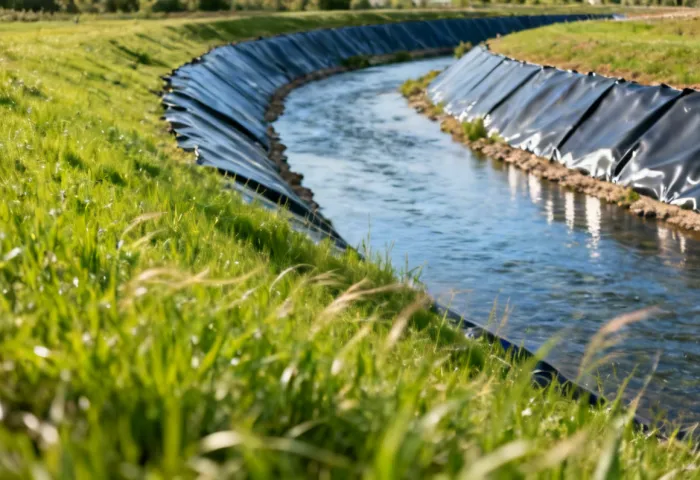
Sustainable water containment with geomembrane
Our Commitments

Sustainability by the Numbers

ISO 14001
Environmental Management Certification
>50yr
Design Service Life
10⁻¹⁴ m/s
Hydraulic Conductivity
GRI
Global Reporting Initiative
Our Approach

Three Pillars of Solmax Sustainability

Responsible Manufacturing

Our ISO 14001:2015 certified facilities operate under environmental management systems that track energy intensity, water use, waste diversion rates, and VOC emissions. Annual targets and audit trails are published in our GRI-aligned sustainability report.

Product Durability

A geomembrane that lasts 50+ years displaces the manufacturing and installation carbon of multiple shorter-lived alternatives. Solmax invests in formulation science specifically to extend service life — not to accelerate replacement cycles.

Ecosystem Protection

Every properly lined tailings pond, landfill, or industrial pond is a groundwater protection asset. Solmax liners have contained billions of litres of leachate, process water, and contaminated seepage that would otherwise threaten downstream ecosystems and communities.

Honest Assessment

What We're Still Working On

HDPE geomembranes are manufactured from polyethylene derived from natural gas or petroleum feedstocks. While bio-based polyethylene is commercially available in limited grades, it currently represents a small fraction of our production. Solmax is monitoring the development of recycled and bio-based polymer feedstocks and participates in industry consortia exploring circular economy pathways for post-service geomembranes.

End-of-life recovery of installed geomembranes remains technically challenging due to contamination and degradation at post-service conditions. We support ongoing research into decommissioning protocols and encourage clients to document installed liner areas for potential future recovery programmes.

Discuss Sustainability Requirements